
Essay 3 ended on a limit that does not need fake followers to be real.
Even if the follower count were perfectly accurate, one question would remain. Follower count of whom — Amir in which role, doing what, for which audience?
This essay asks what a platform would have to keep instead.
Where the other platforms begin
Substack begins with publishing. LinkedIn begins with professional presence. Facebook begins closer to personal and social life. Each of those is a real activity. People do serious work there. We use some of those roads ourselves.
The limit is where they start.
A publishing platform is built for the writer. A professional platform is built for the working self. A social platform is built for the personal self. None of them has to begin with the whole human being. So when Amir arrives, the platform is already a kind of room. He has to decide which Amir fits it.
That is the problem he keeps running into on X, Substack, LinkedIn, and Medium. Which Amir is supposed to enter the room?
The author? The business owner? The counselor? The founder? The family member? A single public profile asks him to bring all of them at once.
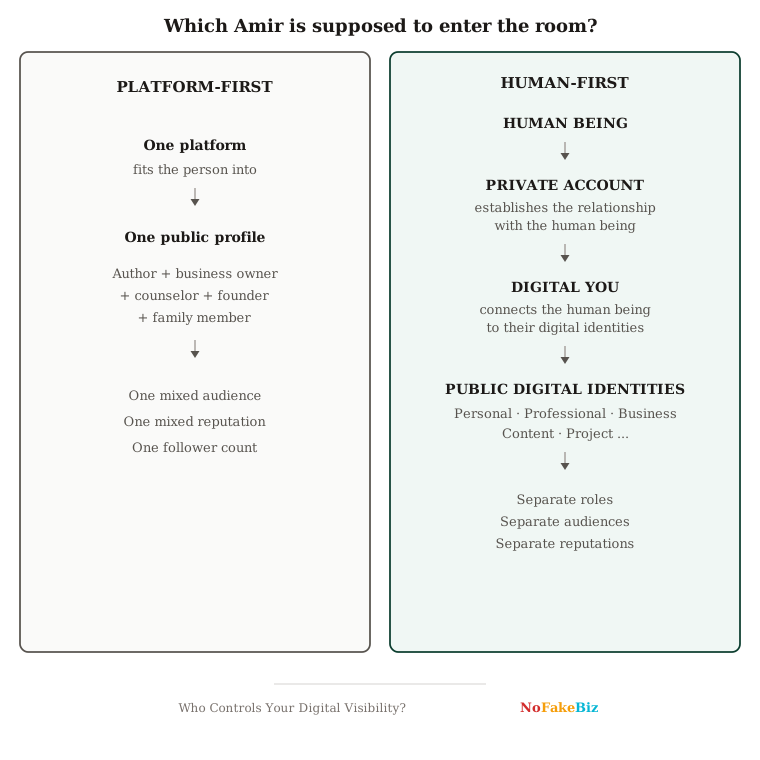
Substack, LinkedIn, and Facebook each begin with a particular kind of digital activity. NoFakeBiz begins one level earlier — with the human being.
Three plain questions
Anyone can make a public face today. A book page. A business page. A family post. The first question is where that face lives, so it is not mixed into every other face.
A place can be built. The second question is what fills it. An empty platform is not a person. The person, and the roles he actually lives, have to be what the place is for.
If both exist, the third question is how they meet. How does the author find other authors? How does a stranger find the transport business without walking through the book? How do those identities do business with one another without a host deciding what they mean?
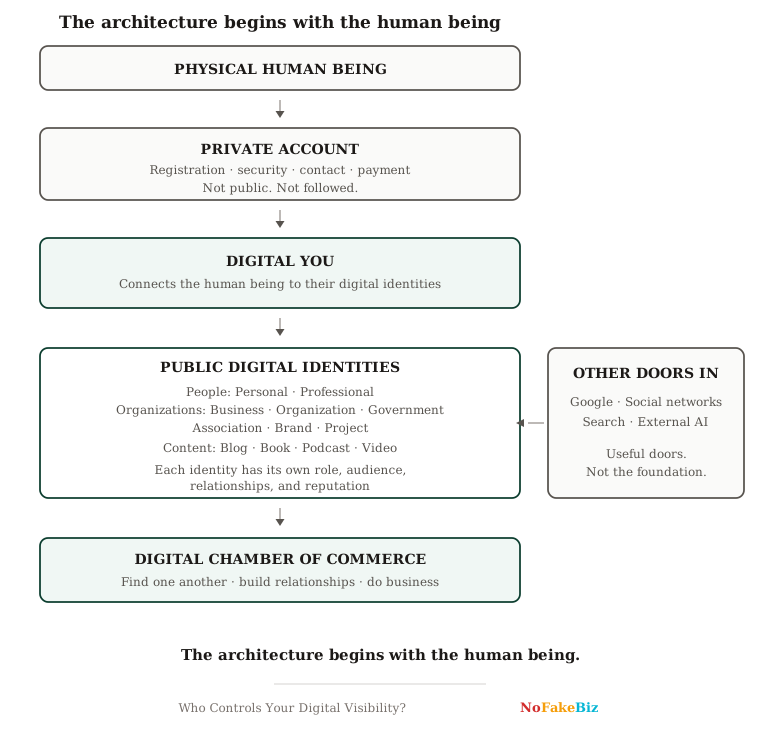
NoFakeBiz is the platform. Digital You represents the human being and the identities connected to that person. The Digital Chamber of Commerce is the larger environment where those identities can find one another, build relationships, and do business. The three are designed to work together.
The difference is not that NoFakeBiz has more profile types. The difference is where the architecture begins: with the human being, not with one particular kind of platform.
What is private, and what enters the room
An account is the private registration. It is a relationship between the person and the platform. It is not a relationship with the rest of the world.
Amir registers. The platform learns who he is, welcomes him by name, and sends the email that confirms he is the person who signed up. He fills in the private details the platform needs in order to deal with him. Payment, if there is any, belongs here. So do his password and any trouble signing in. All of that is the platform talking to him, and him talking to the platform.
Once that is done, the account has nothing more to do with other users. They do not see it. They do not follow it. It is not how he meets authors, customers, or his family.
After the account exists, he lives on the platform through the identities he chooses to need.
An identity is the public way that same person steps forward in one role. On NoFakeBiz those roles are chosen from a set the platform can hold: Personal, Professional, Business, Blog, Book, Podcast, Video channel, Association, Organization, Government, Project, and Brand. A person does not have to use all of them. The set is what can be opened now. It is not a rule that a human being may only be twelve things.
Amir does not need the whole set to see why the rooms stay separate. He can be the author, when he wants to work on the book with other authors. He can be the owner of the transport business, when the work is transport. He can be a member of the family, on a holiday, without the title and without a number beside the name. Separate identities let the same human enter different rooms without carrying every other role with him. What becomes known about the book stays with the book. What becomes known about the transport business stays there. A follower count, if one exists, belongs to that role and that audience. It is still not the reputation.
How someone is found
Imagine you need a plumber in one county.
An attention system asks which plumber is already popular. It may be right by accident. You did not ask who is famous. You asked who does this work, here.
A record built around the human can ask questions a person can follow. Who are the plumbers? Where are they? Under which public identity? What do they say they do? What work is actually attached to that identity?
Discovery should begin with what something is, not with how popular it already is.
The wider web can still use Google to reach what is public. Google can be another way in. It does not have to be the floor under the person, and it does not have to be the system that first decides what the identities are.
If our own feeds ever become the only way a member can be seen, we will have failed that sentence in our own house. A member has to keep a real say in how they appear, and in how they are looked for.
Where this leaves the human being
We started this series with a simple problem: your digital visibility often depends on someone else.
Google may stand between you and the person looking for you. A platform may put a number in front of a tool. Popularity may be asked to stand in for reputation. And one public profile may be asked to represent parts of a human life that do not belong in the same room.
None of those problems requires a villain. They can all come from the same architectural choice: beginning with the platform and fitting the human being inside it.
We are trying the opposite direction.
Begin with the human being.
Give that person one private account. Let the person step forward through the identities that belong to the different parts of life. Let those identities build their own relationships and reputations. Let people find them first by what they are, not by how popular they already are.
Google can still be another door in. Social networks can still be useful roads. Search, feeds, recommendations, and even paid placement can still have a place.
But none of them should have to define the human being before the human being can exist.
That is the standard we are trying to build toward.
The question is not whether NoFakeBiz can become another platform. The question is whether we can build infrastructure in which the platform serves the human being rather than requiring the human being to serve the platform.